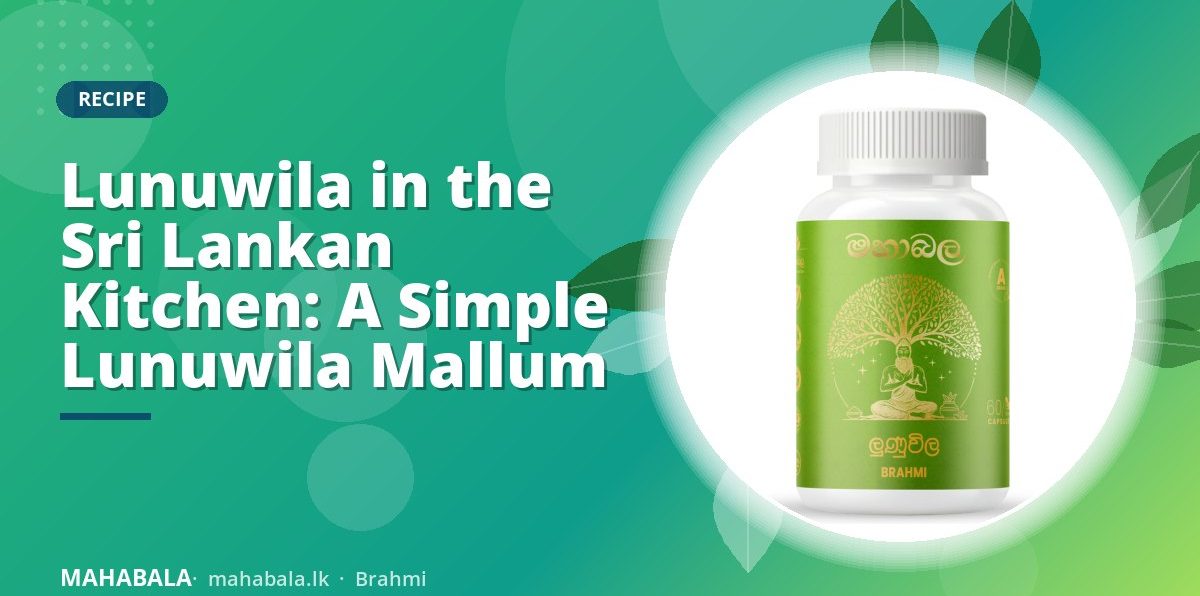
In Sri Lanka, the line between food and herb has always been gentle. Many “medicinal” plants also appear on the dinner table, and Lunuwila (ලුණුවිල) is one of them. Its tender shoots can be prepared as a mallum, the classic Sri Lankan side dish of finely shredded greens tossed with coconut.
About mallum
Mallum (මැල්ලුම්) is made by chopping leaves very finely and cooking them briefly with grated coconut, onion, chilli and spices. It keeps the greens bright and fresh. Gotu kola, mukunuwenna, kankun and many other greens are made this way. Lunuwila has a mildly bitter flavour, so it’s often mixed with milder leaves.
Lunuwila mallum (serves 2–3 as a side)
Ingredients
- 1 cup tender Lunuwila shoots and leaves, washed well
- 1 cup mild greens such as gotu kola or mukunuwenna (optional, to balance the bitterness)
- ½ cup freshly grated coconut
- 1 small red onion, finely chopped
- 1 green chilli, finely chopped
- A pinch of turmeric
- Salt to taste
- Juice of ½ lime
- 1 teaspoon coconut oil (optional)
Method
- Wash the greens thoroughly in several changes of water. Wetland plants can carry mud and grit.
- Chop very finely, the secret of a good mallum.
- Mix the coconut with the onion, chilli, turmeric and salt.
- Warm a pan over low heat with a little coconut oil, add the coconut mix and stir for a minute.
- Add the greens and toss for 1–2 minutes, just until they wilt. Don’t overcook.
- Turn off the heat, squeeze over the lime and serve with rice and curry.
Sourcing safely
Lunuwila grows in wet places, so only use plants from clean water sources, never from drains or polluted ditches. Even better, grow your own in a pot.
Food and herb
Enjoying Lunuwila occasionally as part of a varied diet is a long-standing tradition. For a consistent daily amount, capsules are more practical; see how to take Brahmi capsules. If you’re pregnant, breastfeeding or on medicine, check with your doctor before eating herbs often or in large amounts.
Learn more in the complete guide to Brahmi.
More from our Brahmi guide
- Brahmi (Lunuwila, ලුණුවිල): The Complete Guide to Ayurveda’s Water Hyssop
- Growing Lunuwila (Brahmi) at Home: An Easy Water-Loving Herb
- Brahmi Safety Guide: Side Effects, Interactions and Who Should Check First
- Brahmi (Lunuwila) FAQ: Your Questions Answered
This article is for general information about traditional herbs and is not medical advice. Speak to a doctor or pharmacist before using herbal products if you are pregnant, breastfeeding, taking medicine or have a medical condition.