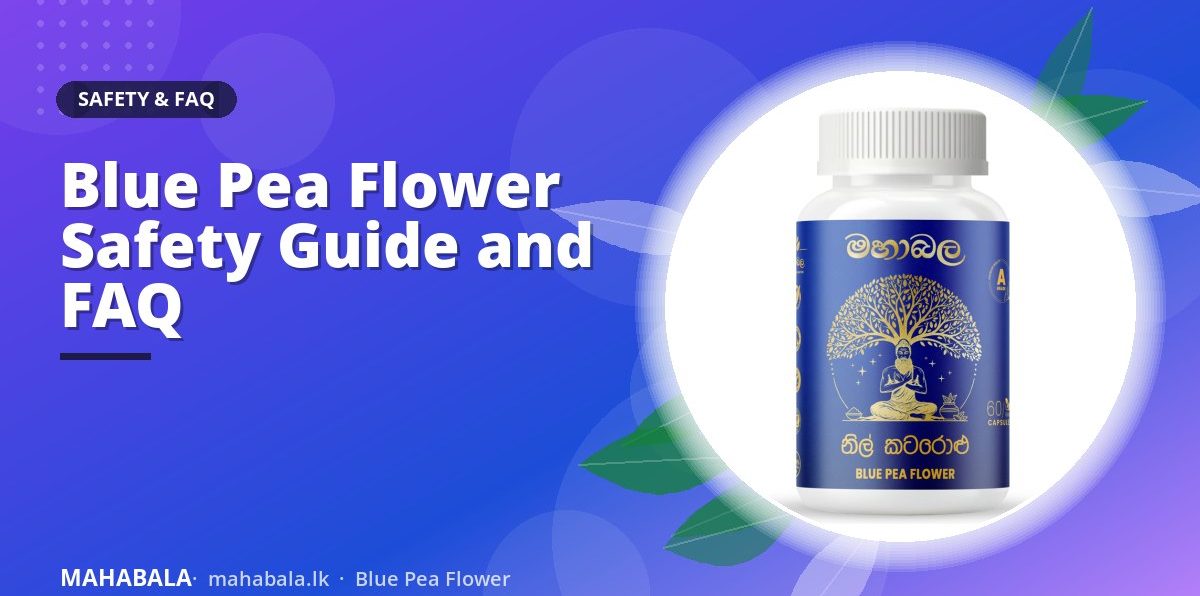
Blue Pea Flower Safety Guide and FAQ
Safety advice and answers to common questions about Blue Pea Flower tea and capsules: dose, pregnancy, medicines, storage and delivery.

Safety advice and answers to common questions about Blue Pea Flower tea and capsules: dose, pregnancy, medicines, storage and delivery.
How to grow Blue Pea Flower (Nil Katarolu) from seed on a fence or trellis: sun, soil, water, harvesting and drying flowers.
Make magical colour-changing Blue Pea lemonade, iced tea, blue rice and a coconut dessert using Blue Pea Flower as natural food colour.
A botanical introduction to Clitoria ternatea (Nil Katarolu): its family, vine, flowers, pods, habitat and names around the world.
Simple DIY beauty ideas using Blue Pea Flower: a hair rinse, a face mist and a mask, with patch-test advice.
The complete guide to Blue Pea Flower (Clitoria ternatea), Sri Lanka’s Nil Katarolu: the plant, tea, colour-changing drinks, capsules and safety.
Wind down with a simple evening routine built around a warm, caffeine-free cup of Blue Pea Flower tea.
Blue Pea Flower is Aparajita in Ayurveda, but it’s sometimes called Shankhpushpi, a name shared with another plant. Here’s how to tell them apart.
The science behind Blue Pea Flower’s colour: anthocyanins, ternatins and why the tea turns purple with lime. Plus a simple kitchen experiment.
How to brew Blue Pea Flower tea, why it’s a popular caffeine-free drink after meals, and flavour pairings to try.