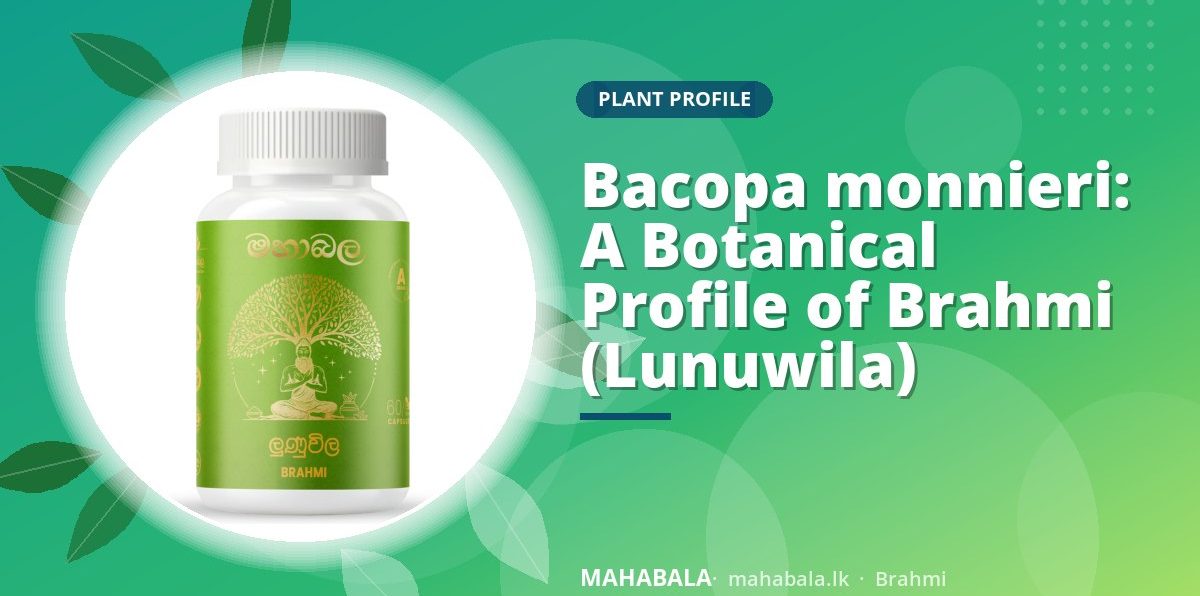
Brahmi, or Lunuwila (ලුණුවිල), is a small plant with a big reputation. Here’s a closer botanical look at Bacopa monnieri.
Names
- Botanical name: Bacopa monnieri (sometimes written Bacopa monniera)
- Sinhala: Lunuwila (ලුණුවිල)
- English: water hyssop, herb of grace, Indian pennywort (a name it shares with gotu kola, adding to the confusion)
- Ayurvedic: Brahmi
- Family: Plantaginaceae (the plantain family)
The species name honours Pierre Charles Le Monnier, an 18th-century French astronomer and naturalist.
What it looks like
- Habit: a low, creeping herb that roots along its stems and spreads into mats
- Leaves: small, thick and slightly fleshy (succulent), oblong to spoon-shaped, in opposite pairs, with smooth edges
- Flowers: small, five-petalled flowers, white to pale pink or lilac, on short stalks
- Taste: traditionally described as bitter
Where it grows
Bacopa monnieri is a wetland plant. It grows naturally in marshes, along streams and pond edges, and around paddy fields throughout tropical and subtropical regions of the world, including Sri Lanka. It’s also a popular plant in aquariums and water gardens. Want to grow your own? See growing Lunuwila at home.
Parts used
Traditionally the whole aerial herb (stems and leaves) is used, fresh as juice or dried as powder. Mahabala capsules contain 500 mg of dried Brahmi powder per capsule.
Don’t confuse it with gotu kola
Centella asiatica (gotu kola) is sometimes also called Brahmi. It has round leaves on long stalks and is a different plant. See Brahmi vs gotu kola.
Wild harvesting and sustainability
Because Brahmi grows in wetlands, quality depends on where it’s harvested. Clean water and unpolluted soil matter, since wetland plants can pick up what’s in their environment. Cultivated, well-managed sources are preferable to plants gathered from polluted ditches.
More in the complete guide to Brahmi and Brahmi and the medhya tradition.
More from our Brahmi guide
- Brahmi (Lunuwila, ලුණුවිල): The Complete Guide to Ayurveda’s Water Hyssop
- Brahmi for Students and Busy Professionals: Building a Calm, Focused Routine
- Growing Lunuwila (Brahmi) at Home: An Easy Water-Loving Herb
- Brahmi Safety Guide: Side Effects, Interactions and Who Should Check First
This article is for general information about traditional herbs and is not medical advice. Speak to a doctor or pharmacist before using herbal products if you are pregnant, breastfeeding, taking medicine or have a medical condition.