In the wet paddy margins and marshy edges of Sri Lanka grows a small, fleshy creeping plant with tiny white flowers. Most people walk past it, yet Ayurveda has treasured it for centuries. This is Brahmi, known in Sinhala as Lunuwila (ලුණුවිල).
This complete guide covers the plant, its place in Ayurvedic tradition, the confusion over its name, how to take it, and the safety points to know, with links to more detailed articles throughout.
What is Brahmi?
Brahmi is Bacopa monnieri, a creeping herb that loves water. It’s found in wetlands, along streams and around paddy fields across South and Southeast Asia, including Sri Lanka. In English it’s called water hyssop or “herb of grace”. Its small, thick, oval leaves and pale white to pinkish flowers make it easy to recognise once you know it. Read the full botanical profile of Bacopa monnieri.
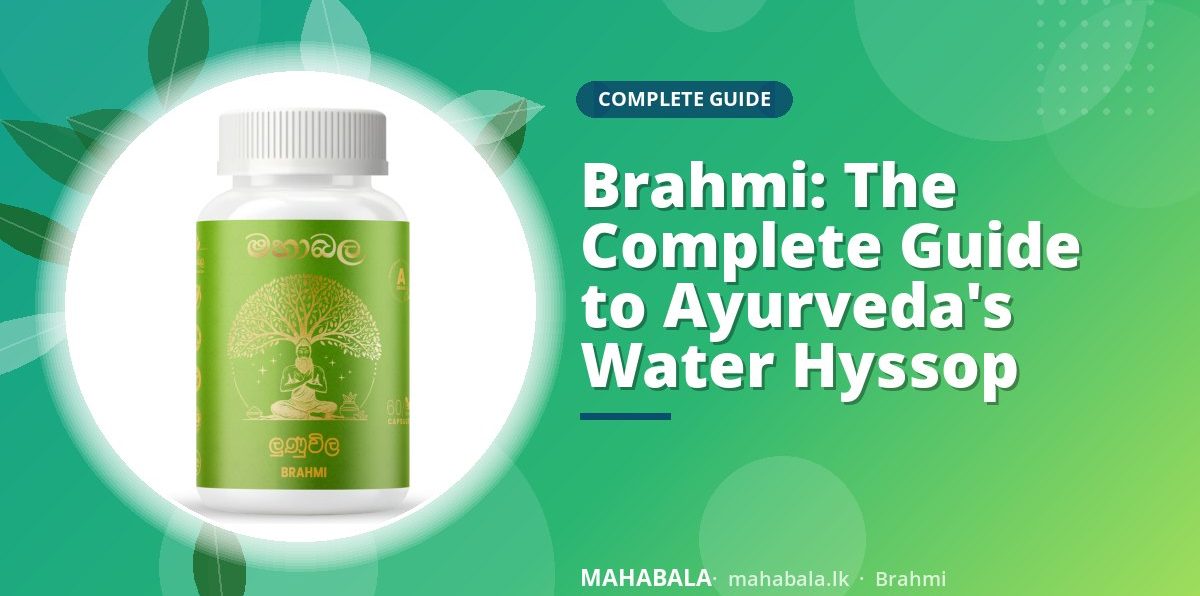
Mahabala Brahmi capsules contain 500 mg of dried Brahmi powder per capsule, 60 capsules per bottle.
Brahmi or gotu kola?
Here’s a common source of confusion: in some regions, gotu kola (Centella asiatica) is also called “Brahmi”. They are two different plants. In Sri Lanka, Brahmi usually means Lunuwila, Bacopa monnieri. We untangle the names in Brahmi vs gotu kola.
Brahmi in Ayurveda
The name Brahmi is linked to Brahma, the creator in Hindu tradition, and to Saraswati, the goddess of learning. In Ayurveda, Brahmi is classed as a medhya rasayana, one of a small group of herbs traditionally associated with the mind and learning. It has long been valued for everyday mental clarity and focus. Learn more in Brahmi and the medhya tradition.
Brahmi in Sri Lankan homes
Lunuwila isn’t only a herbal remedy. In some Sri Lankan homes, its tender shoots have been added to mallum, the finely chopped green leaf dish with coconut. Discover more in Lunuwila in the Sri Lankan kitchen.
How to take Brahmi capsules
The Mahabala direction is 1 capsule twice daily with water. Use daily for best results and don’t exceed the recommended daily dose. See how to take Brahmi capsules for practical tips.
Popular with students and professionals
Because of its traditional association with learning, Brahmi is popular with students and busy professionals. A herb works best alongside good habits, so we’ve put together a guide to building a calm, focused study routine.
Grow your own
Lunuwila is one of the easiest herbs to grow in a pot, as long as you keep it wet. See growing Lunuwila at home.
Safety first
Brahmi is generally taken well, but it isn’t right for everyone. Read our Brahmi safety guide, and speak to a doctor if you’re pregnant, breastfeeding, taking medicine or have a medical condition.
Questions?
Find quick answers in the Brahmi FAQ.
Try Mahabala Brahmi
Mahabala Brahmi (Lunuwila) capsules contain pure dried Bacopa monnieri powder, 500 mg per capsule and 60 capsules per bottle.
All articles in this guide
- Brahmi vs Gotu Kola: Clearing Up the “Brahmi” Name Confusion
- Brahmi and the Medhya Tradition: Ayurveda’s Herbs for the Mind
- How to Take Brahmi Capsules: Dose, Timing and Tips
- Bacopa monnieri: A Botanical Profile of Brahmi (Lunuwila)
- Lunuwila in the Sri Lankan Kitchen: A Simple Lunuwila Mallum
- Brahmi for Students and Busy Professionals: Building a Calm, Focused Routine
- Growing Lunuwila (Brahmi) at Home: An Easy Water-Loving Herb
- Brahmi Safety Guide: Side Effects, Interactions and Who Should Check First
- Brahmi (Lunuwila) FAQ: Your Questions Answered
Explore our other herb guides
- The complete guide to Heen Bovitiya
- The complete guide to Ashwagandha
- The complete guide to Thebu
- The complete guide to Triphala
- The complete guide to Moringa
- The complete guide to Blue Pea Flower
This article is for general information about traditional herbs and is not medical advice. Speak to a doctor or pharmacist before using herbal products if you are pregnant, breastfeeding, taking medicine or have a medical condition.