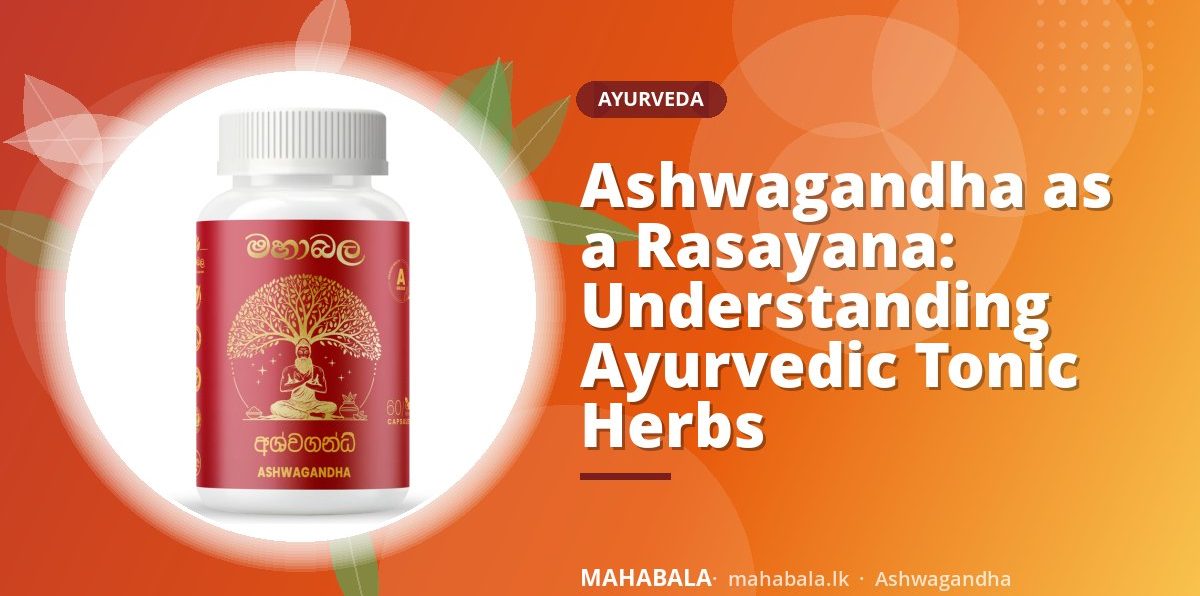
If you read about Ashwagandha (අශ්වගන්ධ) for long, you’ll meet the word rasayana. It’s one of the most interesting ideas in Ayurveda and helps explain why this root has been valued for so long.
What does “rasayana” mean?
In Sanskrit, rasa can mean essence or the nourishing fluid of the body, and ayana means path or pathway. A rasayana is a “path to essence”: a group of herbs, foods and practices traditionally used to nourish the body as a whole and support vitality over time.
Rasayana is one of the eight classical branches of Ayurveda, alongside areas such as internal medicine and surgery. It focuses less on single complaints and more on long-term wellbeing.
Herbs, but also habits
In Ayurveda, rasayana is about more than herbs. Traditional teachings place equal weight on:
- Regular daily routines (dinacharya): waking and eating at steady times
- Wholesome food: fresh, home-cooked meals
- Good rest
- Kind, calm conduct towards others, sometimes called achara rasayana
A tonic herb was meant to sit inside a good lifestyle, not replace one.
Why Ashwagandha is a classic rasayana
Ashwagandha root has long been one of the most popular rasayana herbs. In traditional terms it was described as warming and grounding, and it was usually taken regularly over weeks or months with warm milk, ghee or honey, rather than as a one-off.
Other well-known rasayana herbs include Amla (Indian gooseberry), the three-fruit blend Triphala and Brahmi. Each has its own traditional character.
Bringing the idea into modern life
You don’t need to follow a full Ayurvedic regime to borrow the rasayana mindset:
- Pick a time and stick to it. Take your capsules with the same meals each day. See how to take Ashwagandha capsules.
- Build around good basics: regular meals, daylight, movement and sleep.
- Give it time. Tonic herbs are traditionally taken consistently, not occasionally.
- Keep a simple journal of your routine so you notice how you feel over time.
Our article on Ashwagandha in your daily routine has practical morning and evening ideas.
A note of caution
Traditional use is valuable, but it isn’t the same as medical advice. If you’re pregnant, breastfeeding, taking medicine or have a medical condition, speak to a doctor before using Ashwagandha. Read the safety guide.
Go back to the complete guide to Ashwagandha for the full picture.
More from our Ashwagandha guide
- Ashwagandha (අශ්වගන්ධ): The Complete Guide to Ayurveda’s Famous Root
- Ashwagandha Root vs Leaf: Why the Root Matters
- Ashwagandha in Your Daily Routine: Simple Morning and Evening Ideas
- Ashwagandha for an Active Lifestyle: Fitting It Around Training Days
This article is for general information about traditional herbs and is not medical advice. Speak to a doctor or pharmacist before using herbal products if you are pregnant, breastfeeding, taking medicine or have a medical condition.