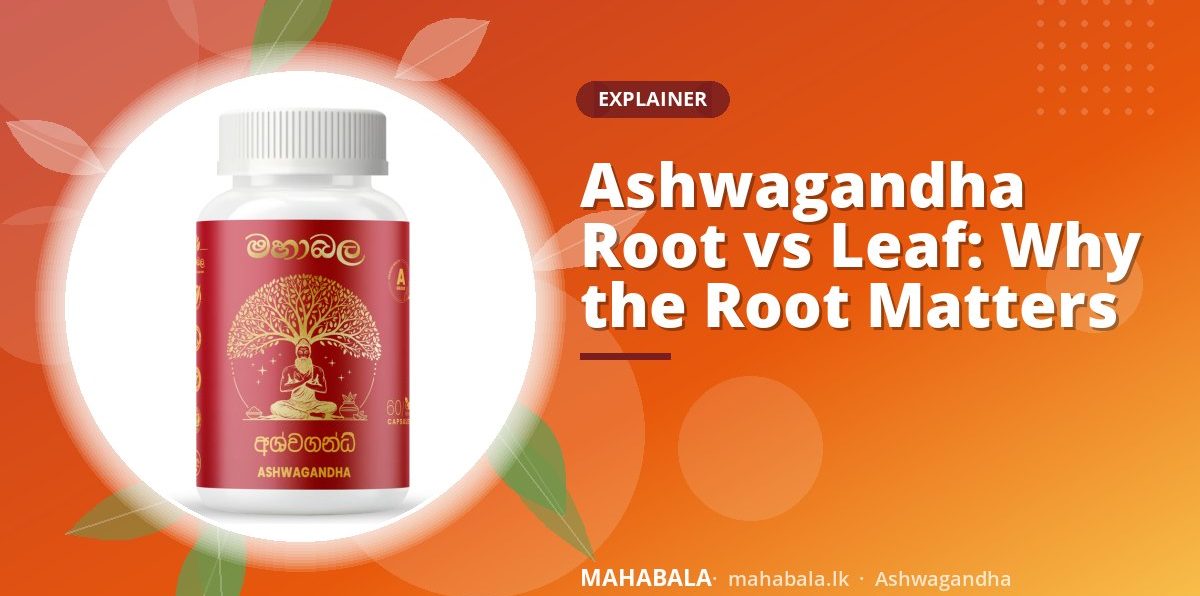
Not all Ashwagandha (අශ්වගන්ධ) products are made from the same part of the plant. Some use the root, some use the leaf and some blend the two. Here’s why that matters.
The traditional part: the root
In classical Ayurveda, the part of Withania somnifera most valued is the root. It was dug, cleaned, dried and ground into powder, then taken with milk, ghee or honey. When traditional texts talk about Ashwagandha, they are almost always talking about the root.
What about the leaves?
The leaves are part of the same plant, but they have a different traditional role and a different natural make-up. Leaves are cheaper and easier to harvest because the plant doesn’t have to be dug up, so they sometimes find their way into low-cost products.
Why it matters to you
- Tradition: if you want Ashwagandha as Ayurveda has used it for centuries, choose root.
- Consistency: different plant parts have different natural compositions, so a root product and a leaf product aren’t interchangeable.
- Transparency: a good label tells you exactly which part is inside.
How to check a label
Look for:
- The botanical name: Withania somnifera
- The plant part: root, ideally stated clearly
- The amount per capsule, for example 500 mg
- Whether it’s a pure powder or an extract, and any added ingredients
Mahabala Ashwagandha capsules contain only Ashwagandha root powder: 500 mg per capsule, 60 capsules per bottle.
Powder vs extract
You’ll also see “extracts”, where the root is processed with water or alcohol and concentrated. Extracts vary widely between brands. Whole root powder is the form closest to traditional use: the dried root, finely ground, with nothing taken away.
A quick comparison
| Root powder | Leaf powder | Extract | |
|---|---|---|---|
| Traditional Ayurvedic use | Yes | Limited | Modern |
| What’s inside | Whole dried root | Whole dried leaf | Concentrated |
| Varies by brand | Low | Medium | High |
Learn more
- The story behind the name Ashwagandha
- How to take Ashwagandha capsules
- The complete guide to Ashwagandha
More from our Ashwagandha guide
- Ashwagandha (අශ්වගන්ධ): The Complete Guide to Ayurveda’s Famous Root
- Ashwagandha for an Active Lifestyle: Fitting It Around Training Days
- Ashwagandha Moon Milk: A Warm Ayurvedic Drink Recipe
- Ashwagandha Safety Guide: Who Should Avoid It and What to Check
This article is for general information about traditional herbs and is not medical advice. Speak to a doctor or pharmacist before using herbal products if you are pregnant, breastfeeding, taking medicine or have a medical condition.