If you’ve ever shopped for Brahmi, you may have noticed that some products show a round-leaved plant and others show a small creeping herb with white flowers. That’s because the name “Brahmi” is used for two different plants. Here’s how to tell them apart.
Plant 1: Bacopa monnieri (Lunuwila)
- Sinhala name: Lunuwila (ලුණුවිල)
- English names: water hyssop, herb of grace
- Looks like: a creeping, succulent herb with small, thick, oval leaves and white to pale pink flowers
- Grows: in wet places such as paddy margins, marshes and stream banks
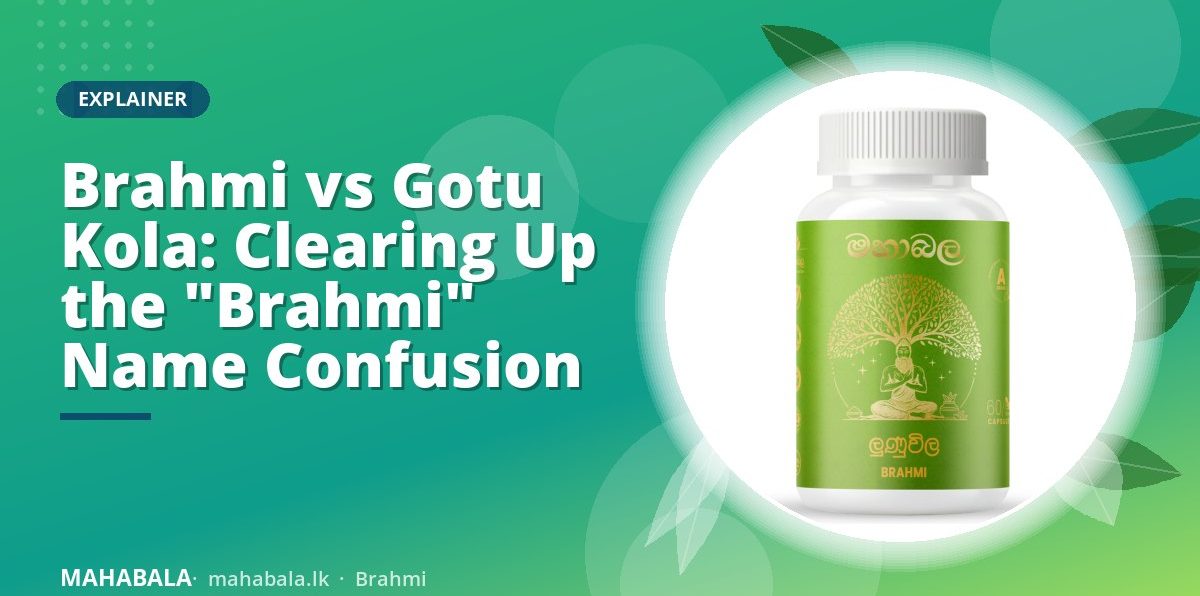
In Sri Lanka and in most classical Ayurvedic usage, Brahmi means Bacopa monnieri. This is what’s inside Mahabala Brahmi capsules.
Plant 2: Centella asiatica (Gotu Kola)
- Sinhala name: Gotu Kola (ගොටුකොළ)
- English names: gotu kola, Indian pennywort
- Looks like: round to kidney-shaped leaves on long stalks
- Grows: in damp, shady places and widely in home gardens
Gotu kola is a favourite Sri Lankan green, eaten as gotu kola sambol and in kola kenda. In parts of North India it is also called “Brahmi” or Mandukaparni, which is where the confusion comes from.
Side by side
| Brahmi (Lunuwila) | Gotu Kola | |
|---|---|---|
| Botanical name | Bacopa monnieri | Centella asiatica |
| Leaves | Small, thick, oval | Round, kidney-shaped |
| Habit | Creeping, succulent | Creeping, with long leaf stalks |
| Typical habitat | Wet, marshy ground | Damp, shady ground |
| Sri Lankan dish | Sometimes in mallum | Sambol, mallum, kola kenda |
Why it matters
The two plants have different natural compositions and different traditional roles. If a label says only “Brahmi”, you can’t be sure which plant you’re getting. Always look for the botanical name. See our Brahmi FAQ for what else to check.
Both have a place
Both are much-loved traditional plants in Sri Lanka. Many families enjoy gotu kola as a food and Lunuwila as a herb. Just make sure you know which one you’re buying.
Learn more about Lunuwila in the complete guide to Brahmi and our botanical profile of Bacopa monnieri.
More from our Brahmi guide
- Brahmi (Lunuwila, ලුණුවිල): The Complete Guide to Ayurveda’s Water Hyssop
- How to Take Brahmi Capsules: Dose, Timing and Tips
- Bacopa monnieri: A Botanical Profile of Brahmi (Lunuwila)
- Lunuwila in the Sri Lankan Kitchen: A Simple Lunuwila Mallum
This article is for general information about traditional herbs and is not medical advice. Speak to a doctor or pharmacist before using herbal products if you are pregnant, breastfeeding, taking medicine or have a medical condition.