Few herbs have travelled as far as Ashwagandha (අශ්වගන්ධ). Once known mainly to Ayurvedic practitioners in South Asia, this humble root is now found in kitchens, gyms and wellness shops around the world. But what exactly is it, and how do you use it well?
This guide brings together everything you need to know, from the plant and its long history to practical tips on taking it, with links to more detailed articles along the way.
What is Ashwagandha?
Ashwagandha is the common name for Withania somnifera, a small, woody shrub in the Solanaceae family, the same family as tomatoes, aubergines and chillies. It has soft, oval green leaves, small greenish-yellow flowers and bright orange-red berries wrapped in a papery husk, which is why it is sometimes called winter cherry. It is also nicknamed “Indian ginseng”, although it is not related to true ginseng.
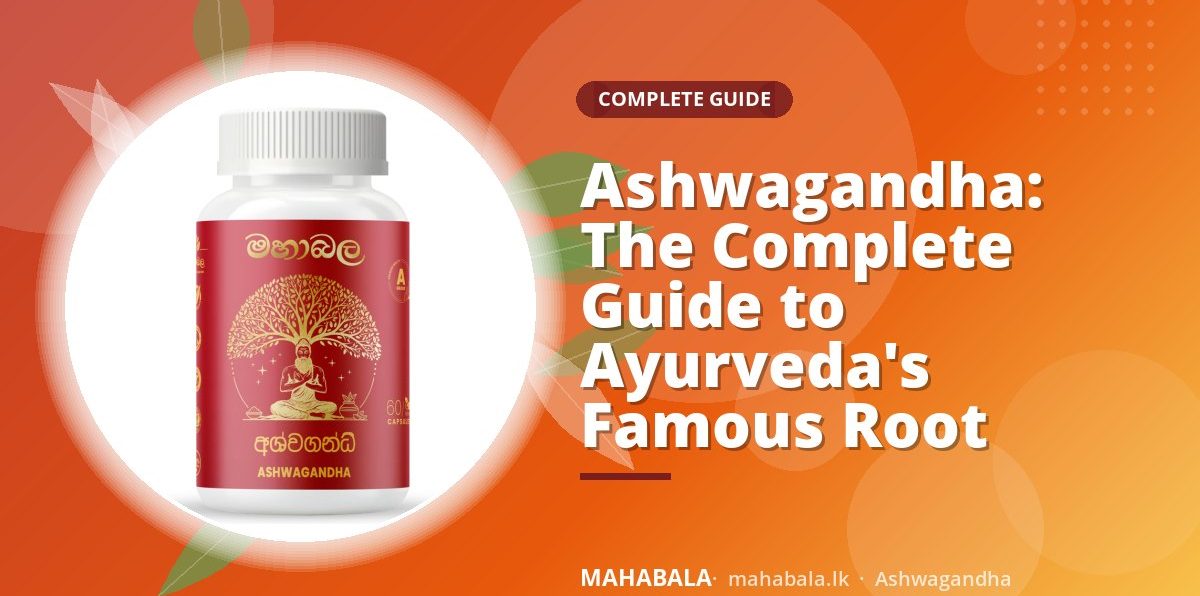
The part traditionally prized is the root. Mahabala capsules contain 500 mg of Ashwagandha root powder, 60 capsules per bottle. Find out why the root matters in Ashwagandha root vs leaf.
Where the name comes from
“Ashwagandha” is a Sanskrit word combining ashva (horse) and gandha (smell), which refers to the distinctive earthy smell of the fresh root. Traditional teachers also linked the name to the strength and vigour of a horse. We look at the story behind the name in what does Ashwagandha mean?.
Ashwagandha in Ayurveda
In Ayurveda, Ashwagandha is classed as a rasayana, a group of herbs traditionally taken as tonics to support overall vitality and long-term wellbeing. It has been part of the Ayurvedic tradition in Sri Lanka and India for centuries. Learn more in Ashwagandha as a rasayana.
How to take Ashwagandha capsules
The direction for Mahabala Ashwagandha is 1 capsule twice daily with meals. Use it daily for best results and don’t exceed the recommended dose. One bottle lasts a month at this dose.
For practical tips on timing and building a routine, read how to take Ashwagandha capsules and our ideas for fitting Ashwagandha into your day.
Ashwagandha for active people
Ashwagandha has become popular with people who train regularly, from gym-goers to cricketers. It’s no replacement for good food, rest and sensible training, but many active people like to include a traditional tonic in their routine. See Ashwagandha for an active lifestyle.
A taste of tradition: Ashwagandha milk
In Ayurveda, Ashwagandha root powder was often taken in warm milk with spices. Try a modern version with our Ashwagandha moon milk recipe.
Safety first
Ashwagandha is widely used, but it isn’t right for everyone. People who are pregnant or breastfeeding, take regular medicine or have a long-term condition should speak to a doctor first. Read our detailed Ashwagandha safety guide before you start.
Common questions
Wondering how long a bottle lasts, whether it’s vegetarian or if you can take it with coffee? See the Ashwagandha FAQ.
Try Mahabala Ashwagandha
Mahabala Ashwagandha capsules contain pure Withania somnifera root powder, 500 mg per capsule and 60 capsules per bottle, delivered across Sri Lanka and internationally.
All articles in this guide
- What Does “Ashwagandha” Mean? The Story Behind the Name
- Ashwagandha as a Rasayana: Understanding Ayurvedic Tonic Herbs
- How to Take Ashwagandha Capsules: Timing, Dose and Consistency
- Ashwagandha Root vs Leaf: Why the Root Matters
- Ashwagandha in Your Daily Routine: Simple Morning and Evening Ideas
- Ashwagandha for an Active Lifestyle: Fitting It Around Training Days
- Ashwagandha Moon Milk: A Warm Ayurvedic Drink Recipe
- Ashwagandha Safety Guide: Who Should Avoid It and What to Check
- Ashwagandha FAQ: Your Most Common Questions Answered
Explore our other herb guides
- The complete guide to Heen Bovitiya
- The complete guide to Brahmi (Lunuwila)
- The complete guide to Thebu
- The complete guide to Triphala
- The complete guide to Moringa
- The complete guide to Blue Pea Flower
This article is for general information about traditional herbs and is not medical advice. Speak to a doctor or pharmacist before using herbal products if you are pregnant, breastfeeding, taking medicine or have a medical condition.