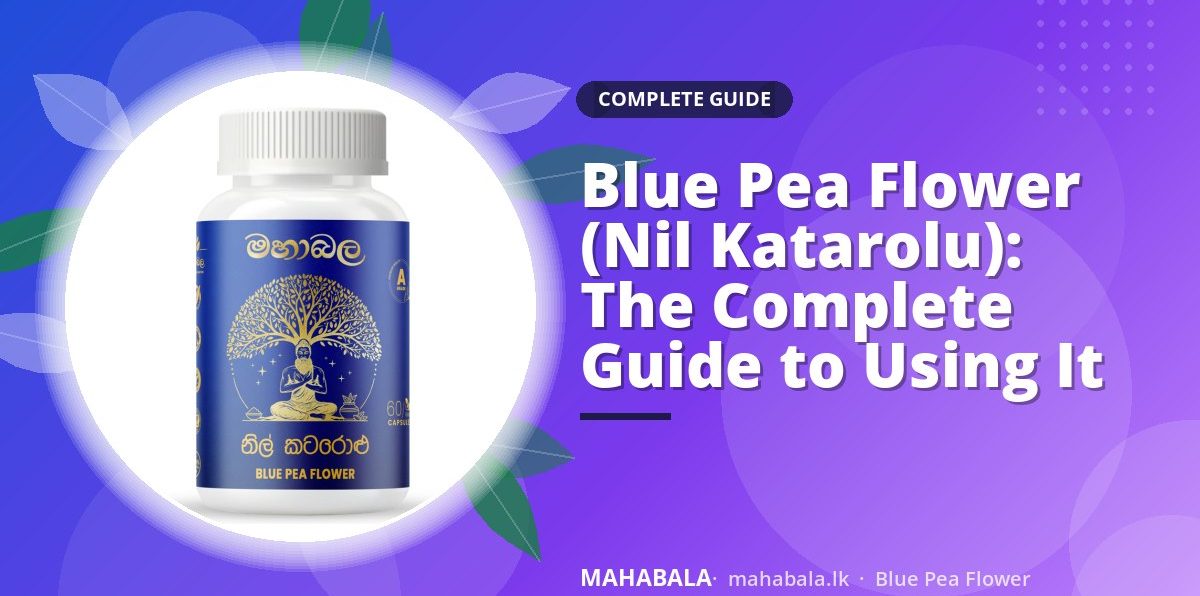
Blue Pea Flower (Nil Katarolu): The Complete Guide to Using It
The complete guide to Blue Pea Flower (Clitoria ternatea), Sri Lanka’s Nil Katarolu: the plant, tea, colour-changing drinks, capsules and safety.
In-depth guides to traditional Sri Lankan and Ayurvedic herbs.
The complete guide to Blue Pea Flower (Clitoria ternatea), Sri Lanka’s Nil Katarolu: the plant, tea, colour-changing drinks, capsules and safety.
How the moringa (murunga) tree became part of Ayurveda, Sri Lankan home gardens and village cooking, and why it’s called the drumstick tree.
Wind down with a simple evening routine built around a warm, caffeine-free cup of Blue Pea Flower tea.
No single food does it all. How moringa fits into the everyday habits that matter most: food, movement, sleep and regular check-ups.
Blue Pea Flower is Aparajita in Ayurveda, but it’s sometimes called Shankhpushpi, a name shared with another plant. Here’s how to tell them apart.
Practical ideas for building balanced plates with vegetables, pulses and whole grains, and easy ways to add moringa to your meals.
The science behind Blue Pea Flower’s colour: anthocyanins, ternatins and why the tea turns purple with lime. Plus a simple kitchen experiment.
How to grow a moringa (murunga) tree from a cutting or seed: sun, soil, water, pruning and harvesting leaves and pods.
How to brew Blue Pea Flower tea, why it’s a popular caffeine-free drink after meals, and flavour pairings to try.
How moringa seed oil and leaf powder are used in skin and hair care, with simple DIY ideas and patch-test advice.