
A vibrant, healthy head of hair starts with a well‑nourished scalp and everyday habits that protect the fibre from wear and tear. Blue Pea Flower (Clitoria ternatea)—known in Sri Lanka as Nil Katorolu—is a naturally caffeine‑free tea rich in colourful plant polyphenols. As part of a wider routine, its antioxidant profile may help buffer everyday oxidative stress around follicles, while balanced meals, protein intake and good circulation underpin stronger‑feeling strands and a calmer scalp environment. A simple daily ritual—sipping Blue Pea tea, massaging the scalp before washing, and managing stress—goes a long way.
The foundations matter: a balanced scalp sets the stage for hair that looks and feels its best . Hallmarks of healthy hair include natural shine, elasticity, minimal breakage, overall thickness, and a comfortable, balanced scalp .
Hair and Scalp 101: What “Healthy” Looks Like
- Shine, elasticity and minimal breakage signal a well‑cared‑for cuticle and resilient cortex; thickness and a comfortable scalp round out the picture ,.
- Hair fibres are constantly exposed to friction, heat and styling; conditioners and care agents help repair and smooth the fibre surface to restore softness and manageability ,.
- Ageing and common scalp conditions also influence hair quality; targeted products can increase tensile strength, volume and manageability when used consistently .
- Ingredient note: Keratin peptides can support hydration and softness, while a range of plant oils (for example, argan or jojoba) help restore smoothness and shine in topical care .
Where Blue Pea Flower Fits
Blue Pea Flower’s value is lifestyle‑based. As a polyphenol‑rich, caffeine‑free infusion, it may:
- Offer gentle antioxidant support that complements a diet rich in colourful plants—useful where oxidative stress contributes to dullness or discomfort around the scalp.
- Pair naturally with routines that encourage comfortable circulation (walks, gentle scalp massage), a factor relevant to follicle nourishment—read more about healthy blood circulation.
- Support an “inside–out” beauty approach alongside topical care; for complexion benefits, see our guide to skin and collagen support.
While traditional wellness circles often celebrate butterfly pea for hair, direct clinical trials on hair growth are limited. Treat the tea as a supportive daily habit within a broader routine rather than a stand‑alone fix.
A Practical Hair Routine Featuring Blue Pea Flower
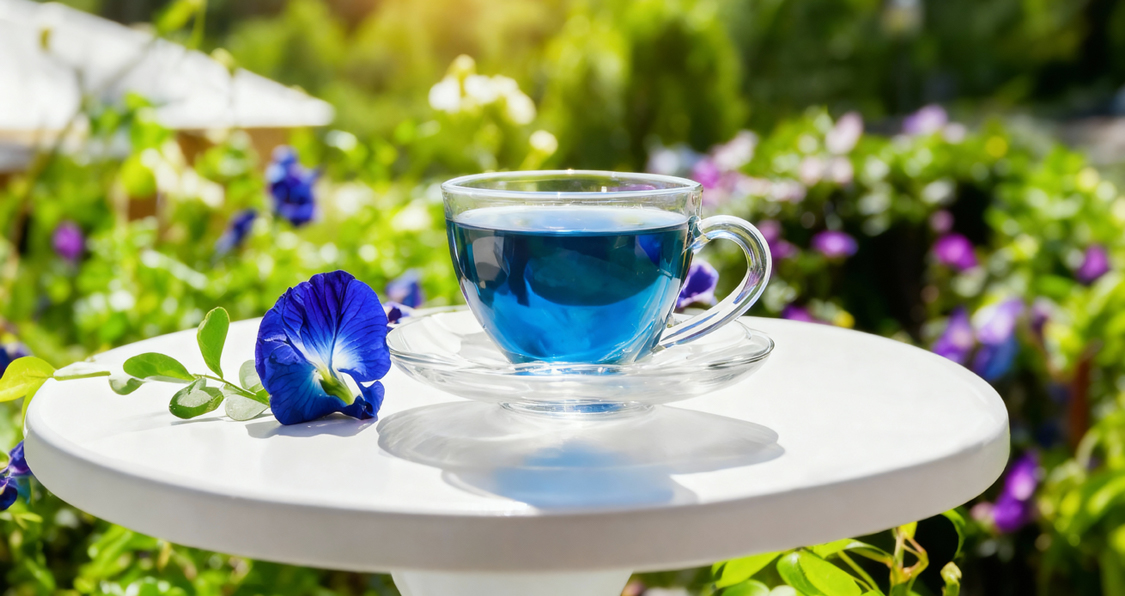
- Brew 1–2 teaspoons of dried Blue Pea Flower in hot water for 5–7 minutes; strain. For a smoother taste and deeper colour, cold‑brew for 6–12 hours.
- Enjoy 1–2 cups per day. Many prefer a cup with breakfast and another as an afternoon reset.
- Pair your tea with protein‑rich meals (eggs, fish, legumes, yoghurt) to support keratin formation, plus plenty of colourful veg and fruit for wider phytochemical coverage.
- Pre‑wash scalp massage: Work a few drops of a light oil into the scalp for 2–3 minutes to lift buildup and encourage comfort; shampoo gently.
- Minimise fibre stress: Lower heat settings, use a heat protectant, and finish with a conditioner or leave‑in to smooth the cuticle and ease combing,.
Tip: Build a weekly ritual—tea, scalp massage, gentle wash, conditioner, and a cool rinse—to reinforce shine and manageability.
Everyday Behaviours That Protect Hair
- Sleep and stress: Restful sleep and stress care can reduce scalp tension and break the “over‑style → over‑wash” cycle.
- Combing technique: Detangle from ends upward; use a wide‑tooth comb on damp hair to reduce breakage.
- Towel and heat: Microfibre towels and lower heat limit cuticle lift and moisture loss.
- Sun and pool: Shield hair from UV and chlorinated water; a hat and a quick freshwater rinse help preserve softness.
- Scalp focus: A balanced scalp is the base of any effective hair routine .
Who Might Consider Blue Pea Flower
- Those wanting a calm, caffeine‑free daily ritual to complement scalp‑first routines.
- People working on shine and manageability who also address diet, sleep and styling habits.
- Anyone building an “inside–out” beauty approach that aligns hair, skin and overall wellbeing—see our beauty and healthy ageing guide.
Safety and Quality Notes
- Blue Pea Flower is generally enjoyed as a culinary tea. If you’re pregnant, breastfeeding, have a medical condition or take medicines, check with your clinician before regular use.
- Choose clean, food‑grade flowers from reputable sources.
- This content is educational and not medical advice.
Ready to add colour and calm to your routine?
Shop Blue Pea Flower Tea
Related Articles
- Complexion from within: skin and collagen support
- Vascular support for delivery: blood circulation
- Rituals that last: beauty and healthy ageing
FAQs
- Will it regrow hair?
Evidence is limited. Focus on overall scalp care, nutrition, gentle styling and clinician guidance for specific concerns. - Can I cold‑brew?
Yes. Longer steeps deepen colour and bring a smoother flavour. - How long until I notice changes?
Many people feel a difference in manageability within weeks when combining tea with consistent scalp care and smart styling. - What should I prioritise in products?
Look for gentle cleansers, conditioners that improve softness and combability, and heat protectants; these support cuticle integrity and tensile strength over time,,.
Key Takeaways
- A healthy scalp underpins better‑looking hair; shine, elasticity and minimal breakage are key signs of vitality,.
- Hair fibres benefit from protection against friction and heat; conditioners and care agents smooth and repair to improve manageability,.
- Blue Pea Flower offers a calm, antioxidant‑rich ritual that fits naturally into a scalp‑first, lifestyle‑led approach to hair resilience.
- Consistency counts: Pair daily tea with protein‑centred meals, gentle styling and regular scalp care.
Last Updated
Friday, 31 October 2025 (UTC)