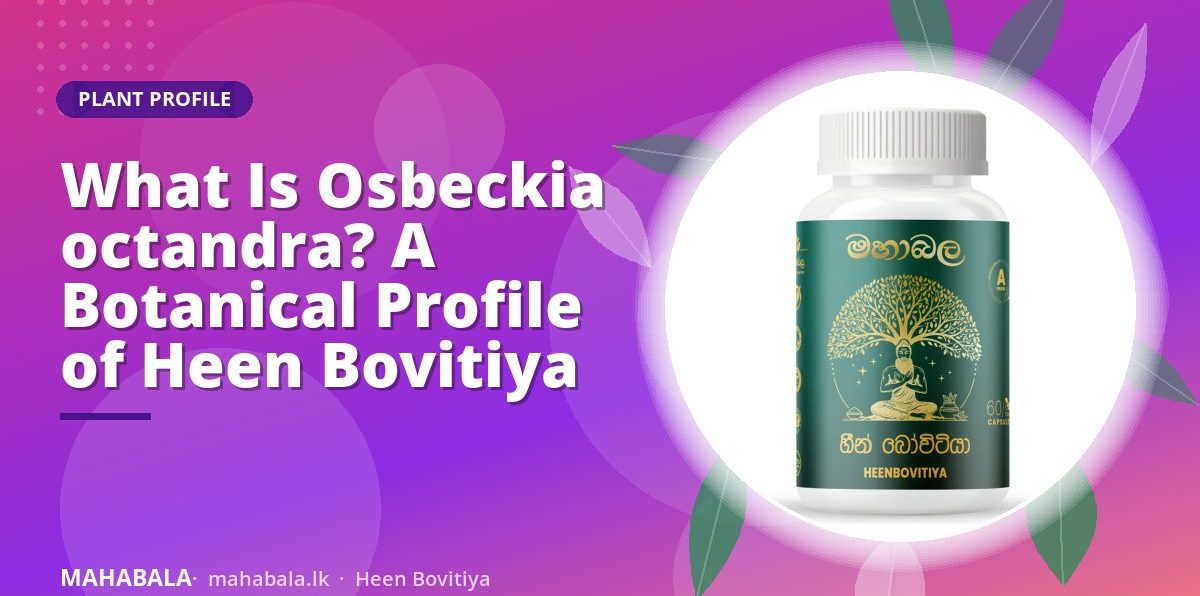
Before you take any herb, it helps to know the plant behind it. Heen Bovitiya (හීන් බෝවිටියා) is a familiar sight in Sri Lanka’s countryside, but its botanical story is less well known. Here is a simple profile of Osbeckia octandra.
Name and family
- Botanical name: Osbeckia octandra
- Sinhala name: Heen Bovitiya (හීන් බෝවිටියා)
- Plant family: Melastomataceae, a large family of flowering plants found mostly in tropical regions
The species name octandra comes from Greek and means “eight stamens”, which describes the plant’s flowers. The genus Osbeckia honours Pehr Osbeck, an 18th-century Swedish naturalist and student of Carl Linnaeus.
What it looks like
Heen Bovitiya is a small, upright shrub, usually growing to around waist or chest height. Look for:
- Leaves: narrow to oval, arranged in opposite pairs, with the clear lengthwise veins typical of the Melastomataceae family. They often feel slightly rough or hairy.
- Flowers: striking pink to purple petals with a cluster of stamens in the centre. They open in the morning sun and bring a splash of colour to grassy slopes.
- Fruit: small, cup-shaped capsules that hold many tiny seeds.
Where it grows
Osbeckia octandra is native to Sri Lanka. It likes open, sunny spots with well-drained soil and is most often found in the wet and intermediate zones, on grasslands, hillsides, tea-estate edges and roadside banks. It is a hardy plant that can recolonise cleared ground, which is one reason it has always been easy for villagers to find. If you would like to grow it yourself, read growing Heen Bovitiya at home.
The part that is used
In traditional practice the leaves are the main part used, either fresh or dried. Mahabala capsules use dried leaf powder only: 500 mg per capsule, 60 capsules per bottle.
Why botanical names matter
Common names can be confusing. The same Sinhala, English or Ayurvedic name can be applied to different plants in different regions, and similar-looking species can be mixed up. A Latin botanical name on the label tells you exactly which plant you are buying. That’s why every Mahabala product lists its scientific name. Our buyer’s checklist explains what else to look for.
Learn more
For the bigger picture, including tradition, ways to take it and safety, head back to our complete guide to Heen Bovitiya, or explore how families have used it in Sri Lankan tradition.
More from our Heen Bovitiya guide
- Heen Bovitiya (හීන් බෝවිටියා): The Complete Guide to Sri Lanka’s Native Herb
- How to Take Heen Bovitiya Capsules: Dosage, Timing and Daily Routine
- Heen Bovitiya Kola Kenda: A Traditional Sri Lankan Green Porridge Recipe
- Capsules, Tea or Fresh Leaves? Choosing Your Heen Bovitiya Format
This article is for general information about traditional herbs and is not medical advice. Speak to a doctor or pharmacist before using herbal products if you are pregnant, breastfeeding, taking medicine or have a medical condition.